Written by Canadian SportWORKS Officer, Talvir Singh
Talvir’s international experiential learning experience is funded by the Queen Elizabeth Scholars (QES) Program. This collaborative initiative is made possible through the leadership of the Rideau Hall Foundation, in collaboration with Community Foundations of Canada, Universities Canada, and Canadian universities. Through its promotion of international student exchange and civic engagement, the QES program is helping to grow young Canadians into global citizens while promoting Canada as a destination for the world’s top talent and attracting top talent and international research leaders to Canada.
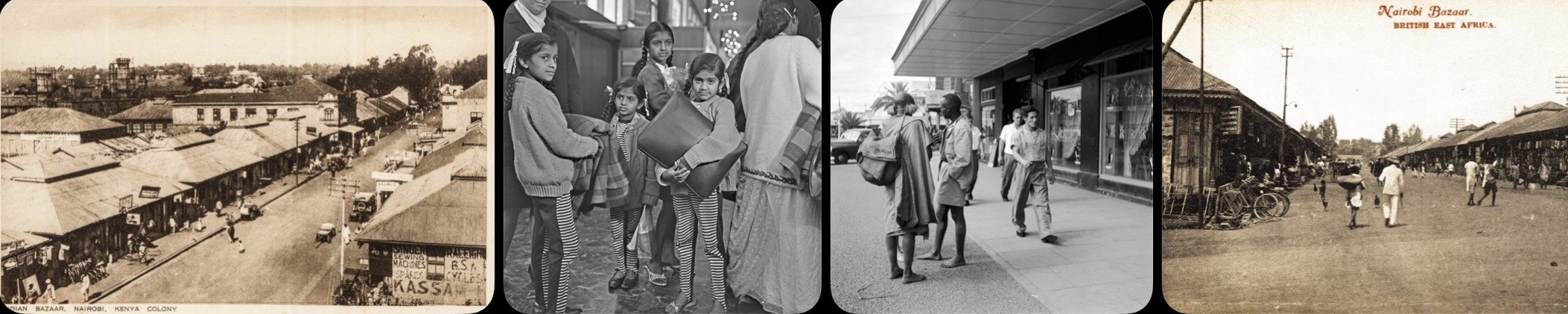
Indian Ocean Connections Before Railway Migration
The story of the first Sikhs in Kenya begins long before Nairobi became a capital city and before railways stretched across the interior of East Africa. By the late nineteenth century, the Indian Ocean had already connected the East African coast to India through centuries of trade shaped by seasonal monsoon winds. Cotton textiles from India circulated widely along the Swahili coast, and coastal cities such as Mombasa were already familiar with merchants and sailors from South Asia. When Sikh migrants arrived in the 1890s through the railway system, they were entering a region that had long been part of a shared commercial world across the ocean rather than stepping into an unfamiliar frontier.


Railway Construction and the First Sikh Settlers in Kenya
The largest early movement of Sikhs into Kenya began with the construction of the Kenya Uganda Railway between 1896 and 1901. The railway was one of the most ambitious infrastructure projects of the colonial period and required thousands of workers with technical training and physical endurance. Many Sikh migrants were recruited from Punjab because they came from artisan backgrounds that prepared them for demanding work in unfamiliar environments. They worked as carpenters shaping timber bridges, blacksmiths repairing iron fittings, masons constructing culverts, mechanics maintaining locomotives, and transport handlers moving materials inland across difficult terrain. These were skilled roles that demanded accuracy, coordination, and resilience rather than unskilled labour alone.


The railway opened the interior of East Africa to new movement and settlement, but it also opened a new chapter in Sikh migration. When construction ended in 1901, several thousand Indian workers chose not to return home. Instead, they remained along the railway corridor and began establishing permanent communities. This decision marked the beginning of a lasting Sikh presence in Kenya and transformed what began as temporary labour migration into generational settlement.
From Railway Camps to Nairobi Neighbourhoods
Early Sikh settlement followed the railway itself. Camps gradually became neighbourhoods, especially in towns such as Nairobi, which began as a railway depot and later developed into an administrative centre. Areas such as Ngara became early residential zones where Indian families established homes close to workshops and commercial districts. The shift from temporary labour camp to settled community can be seen in the objects migrants carried with them across the ocean. Storage trunks preserved personal belongings from Punjab, while musical instruments such as harmoniums and tablas sustained devotional practice and cultural continuity within new surroundings. These details reflect how migration quickly became rooted in family life rather than remaining tied only to employment.


The first generation of Sikh migrants rarely arrived with wealth. Their strength lay in technical skill and disciplined work habits that allowed them to adapt to new environments. They established carpentry yards, transport services, mechanical workshops, and construction trades that supported the growth of early towns. Within a single generation, Sikh migrants moved from railway labourers to urban residents raising families whose identities were shaped both by memory of Punjab and by life in East Africa. Their children entered schools and professions that expanded the community’s role within Kenyan society and strengthened its presence across multiple sectors of urban life.
The Dastar as a Visible Marker of Sikh Identity in Kenya
Among the most recognizable signs of Sikh presence in early colonial Kenya was the dastar. Along railway corridors and within administrative towns, the turban became associated with Punjabi railway workers and Sikh police officers who served in colonial security forces. Yet the meaning of the dastar extended far beyond occupational identity. It represented continuity with Sikh discipline, dignity, and faith carried across the Indian Ocean from Punjab into East Africa. Over time, the turban became part of Kenya’s visual landscape while continuing to function as a symbol of spiritual commitment within Sikh communities themselves. It came to represent both difference and belonging at the same time.


Gurdwaras as Centres of Faith, Hospitality, and Community Life
As Sikh families settled across Kenya, they established gurdwaras that functioned not only as places of worship but also as centers of hospitality, education, and community organization. These institutions anchored settlement and ensured continuity of faith across generations. One of the most significant examples is the Makindu Sikh Temple, which developed along the railway corridor and became known as a place where travellers of many backgrounds could receive food and rest through the practice of langar. Through gurdwaras, Sikh migrants created spaces where religious practice merged with public service. These institutions strengthened social networks and helped transform migrant settlements into stable communities visible across the country.


Expanding Economic Contributions Across Colonial Kenya
The economic contributions of early Sikh migrants were closely tied to their technical knowledge and adaptability. They constructed railway lines, repaired engines, built bridges, and maintained transport systems that connected the coast to inland regions. As towns expanded, their roles shifted into carpentry trades, mechanical workshops, construction services, and transport logistics. Later generations entered civil service, medicine, engineering, commerce, and education. Institutions such as Khalsa schools in Nairobi reflected the importance placed on literacy and professional advancement within the community and helped shape both Sikh identity and wider civic participation in Kenya.


Sikh Participation in Labour Movements and the Independence Era
Sikh participation in Kenya’s development extended beyond infrastructure and commerce into labour organization and political activism. Makhan Singh emerged as one of the most influential figures in Kenya’s trade union movement during the colonial period and played an important role in organizing workers across racial boundaries. His activism contributed to broader demands for independence and demonstrated that Sikh migrants were not only builders of railway lines and workshops but also participants in shaping Kenya’s political future. His leadership placed Sikh voices within the wider struggle for equality and self-governance that defined the final decades of colonial rule.


Continuing the Legacy of Sikh Communities in Kenya Today
Across generations, Sikh families in Kenya continued to expand their contributions into engineering services, transport logistics, construction trades, manufacturing support, medicine, education, and retail networks. Their presence reflects continuity rather than concentration within a single industry. It grows from traditions of technical skill, disciplined work, and community service established during the railway era. Following the 1972 expulsion of Asians from Uganda under Idi Amin’s government, Kenya became an important point of stability for some displaced Sikh families who were already connected to the region through earlier railway-era settlement and community networks. Although many Ugandan Asians relocated to the United Kingdom and Canada, some Sikh families moved south into Kenya, where established gurdwaras in Nairobi, Mombasa, and Nakuru provided immediate support through accommodation, langar, and community assistance. Their arrival strengthened existing Sikh institutions rather than creating entirely new ones, reinforcing Kenya’s position as one of the central anchors of Sikh life in East Africa. This moment demonstrated that the Sikh presence in Kenya was not only the result of nineteenth-century railway migration but also part of a wider regional history in which communities supported one another across national borders during periods of political uncertainty.


The first sikh migrants who travelled inland from Mombasa could not have predicted the scale of change that would follow their arrival. Yet the rail lines they helped build still shape movement across Kenya. The gurdwaras they established continue to serve communities. The families they raised remain part of the country’s social fabric.
Sikh’s story is not only about migration. It is about being a part of what makes Kenya what it is today.
-Talvir